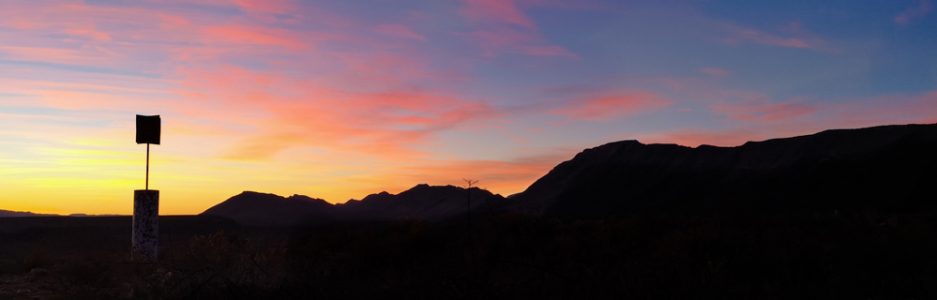
I remember some happy parts of my childhood and my life in the beautiful land of my birth, and how it ended.
I remember the games – hide and seek, marbles and metal goons, hopscotch, yoyo’s, French skipping, and stingers with the boys at school.
Cycling my red Raleigh bike, with a 3 speed, through the vlei between scattered suburbs, on a myriad of well-worn dusty single-tracks and just being able to see over the long grass if I stood tall on my pedals. Always at the back always trying to catch up!
Kite flying with just never enough wind and chasing my brother’s model aircraft, when he or it, lost control and the small plastic and balsa wood craft disappeared into the open bush behind our house.
I remember reading, sitting in an aluminium folding chair in the back garden on frost damaged grass, in the bare warmth of a fading afternoon winter sun and retreating into the house to the fire as the sun disappeared and temperature plummeted. The smell of burning pinecones and the popping of gum and small pieces of exploding Wankie coal hitting the grate from the open fireplace. Going to bed in winter sheets with homemade bed socks on. Frost, white and crunchy on the grass in the morning.
Under dressed and freezing at school and looking for a spot in the sun at breaktime. Fray Bentos sandwiches smelling and tasting of Tupperware, every day, except when my beloved Gran made fresh white bread sandwiches with grated biltong and real butter, wrapped in silver foil…mmmm. She was the one godsend in my early life and no not just because of the sandwiches!
Picnics with my dolls or teddy in the garden in summer and a rare, (perhaps the only one) cricket game, tip and run, with the whole family. Swimming next door in my best friend’s pool and making fairy gardens in unkempt flowerbeds. Bicycle racetrack routes through the trees and shrubs of our large garden. A piece of cardboard in the spokes held by a wooden clothes peg converting my bike to a ‘motor bike’ that made me go even faster!! Or tying string to the handlebars and pretending it was a horse! Washing teddy bears and making go-carts.
The smell of paraffin and cooking from the ‘kia’ (domestic workers quarters on the same property as ours) on the primus stove and sharing roasted peanuts, mielies (corn on the cob) and “weaser” (fried grasshopper), with my ‘nanny’ and the gardener. Smoking paw – paw leaves rolled in newspaper! But only once!
Climbing trees, playing with the dog and being on my swing, at the bottom of the garden out of sight. A swing that gave me hours of solitude, pondering thoughts, feelings and problems, that I had no idea how to deal with.
Mazoe orange juice. Penny cools. Weekly Quality Street sweets and chocolate treats from Gran.
On hot summer days, the sound of the ice cream man ringing his bell and me running out and half way down the block after him, with small change tickeys and sixpences, tightly squeezed in my hand, for a frozen red lolly, or a banana milk ice, climbing up on the wheel to peer in and choose and always begging for a piece of dry ice to play with. Dairyboard was my favourite. Lyons Maid, only when there was nothing else!
Mozzie bites, ice cold water sneaked from the bottle in the fridge, lazy weekend afternoons, weeding the grass, sunburn, homework, swotting, cycling to school 3 1/2 kms daily come rain or shine.
Tropical storms, huge drops slowly plopping onto the dry earth, then wild uncontrolled sheets of rain and wind with crashing thunder and lightning too close. And then just as soon as it came, all was calm and still, cool and clean. A million flying ants emerging in the garden, heavy drops from the trees falling silently into the soaked earth. Little dykes of freshly mowed grass that the rain had washed into contour lines around the garden. A scent of freshness like no other.
Rhodesia. Africa. Home.
I remember having to dress up to go to “big” town, a big event, only 5 kms away. Little town was the local Avondale Shopping centre and did not require any special preparation, but “big” town was an event, sometimes climaxing with tea in the Barbour’s tearoom or Saunders, across the road in First Street.
It also meant a visit to my beloved Grandparents. Grandad had his own men’s outfitters shop, where I always felt special walking in and all the staff would greet us, we had to be calm and on our best behaviour, hands behind our backs at all times, we were threatened with all kinds of horrors if we did not obey. The felt hat steamer always fascinated me!
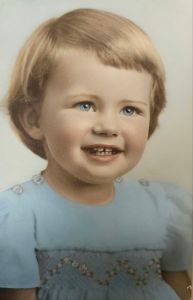
Gran had her own photographic studio, upstairs in a grand old building in the main street, which housed a monster camera that equally fascinated me and scared me a little growing up! There would be a series of shuffles and noises, then Gran would emerge from behind the cupboard size camera and from under a large black cloak, say ” keep still darling – smile” then squeeze something in her hand, more noises, clicks and whirrs, sometimes accompanied by a lightning like, flash. This is an early hand coloured portrait photo of me from her:)
The curved wooden banister up to her studio on the first floor was well worn and it was as if it invited us to climb up and slide down, but only when mother wasn’t looking. We were ‘good’ children, but good through fear not through love.
It was a very white, colonial, middle class, seemingly uncomplicated way to grow up. I started out as an outgoing, bright, adventurous, and curious child and was never bored. The changes happened early and insidiously, then I was lonely, alone, afraid, misunderstood, ill-treated and often sad, but never bored.
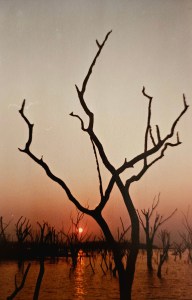
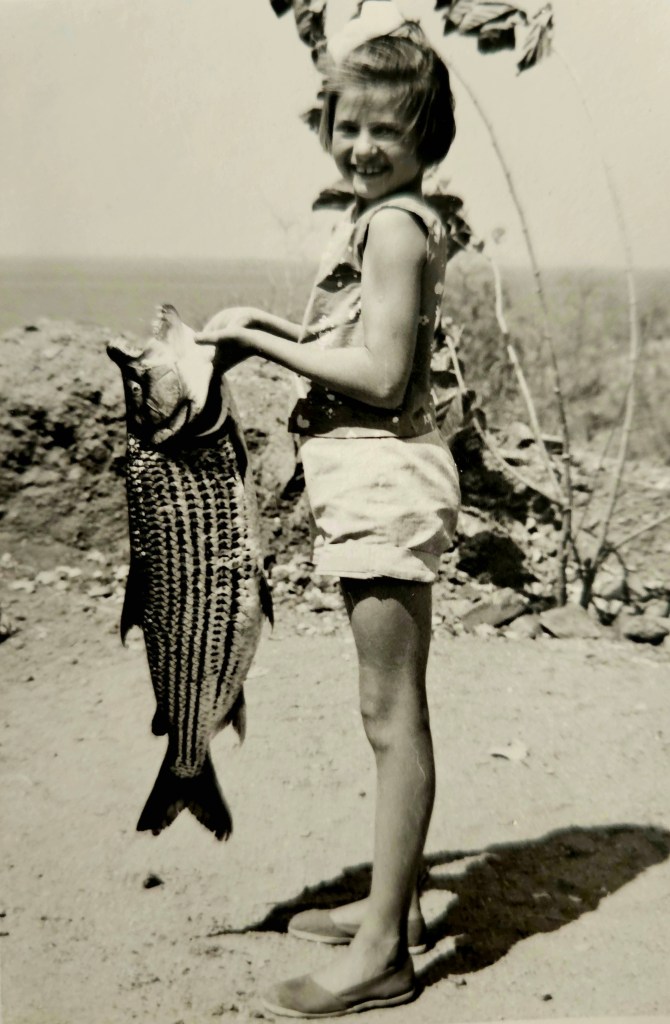
I remember my most favourite moments were my many trips to Kariba. My father had built a boat and for as long as I can remember we spent the part of most April school holidays there. Firstly, on Redcliff Island with Rex Bean. A hot, sultry 10 days or so spent swimming and fishing and adventuring. My brother 5 years older was never a willing partner and I am sure there was much more we could have done. But being alone did not stop me.
It was always a time in my childhood that I felt most free. I loved the fishing, the cool mornings and spectacular sunsets, the freedom, the wild animals, the thunderstorms, and the water. I thrived on the relaxed atmosphere. I was safe when my father was present. When Redcliff became a Tsetse research station we spent time at Lake View Inn Chalets on the mainland, but equally as alluring. With a huge walk up the hill, from the jetty, it felt like an 80-degree incline to the Hotel! On one of those holidays, I learned to whistle with my two fingers, and I still embarrass my family if the occasion arises and I need to use that skill. I loved the heat, the smell of a 2-stroke outboard motor, the dust, the freshly caught fish smells and just being…surrounded by the earth……. feeling safe and free. The night sounds of insects and distant lion’s roar, the haunting calls of the fish eagle that still seduce me and take me right back to that time and place.
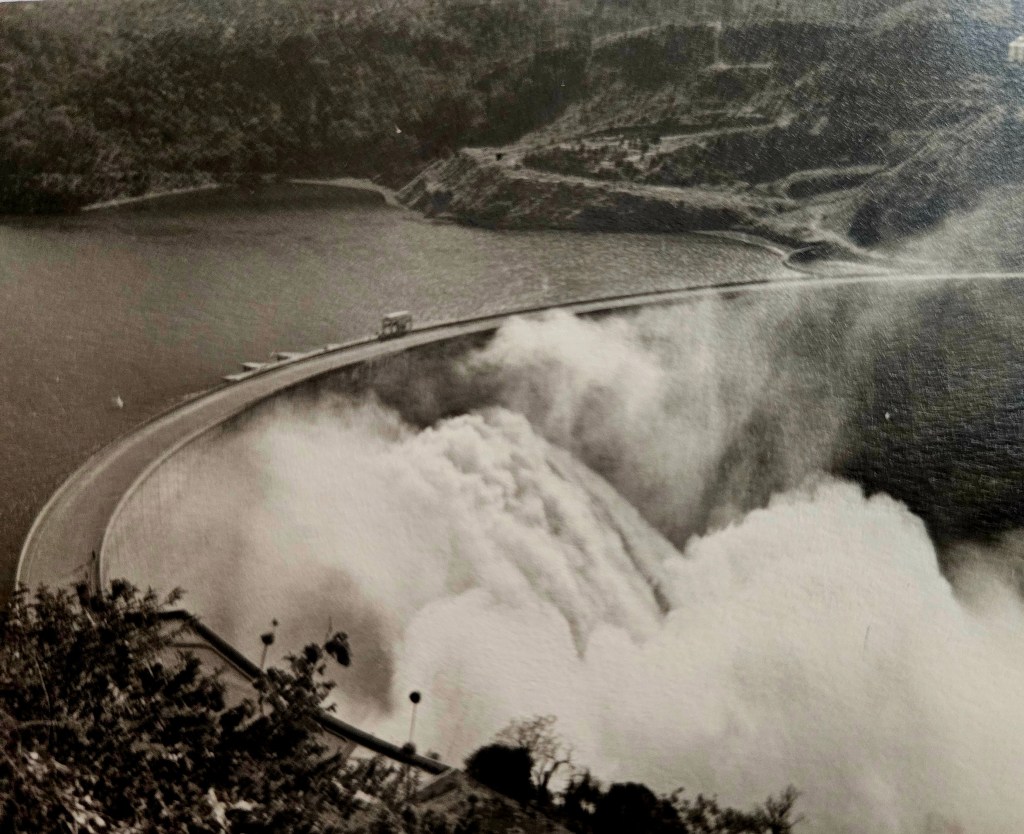
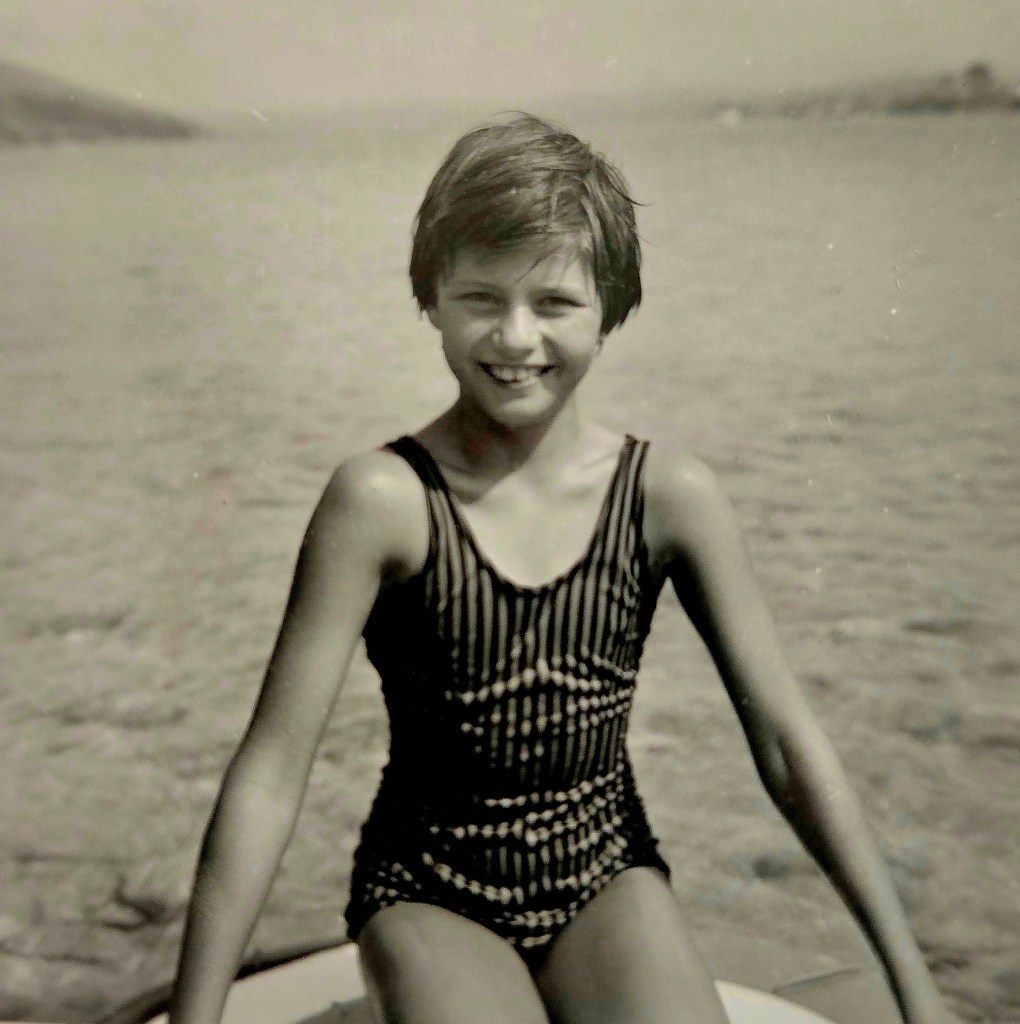
Safe. Happy. Rhodesia. Home
The other happiest memories I have were of Rusape. I was born when we lived in Rusape it is one of the many reasons, I’ve always held the area very dear. Both my godparents had farms there and when I was older perhaps 12 or 13, I was allowed to go and visit for a few days at a time or a week, if I was lucky.
One was a tobacco farm set amongst the magnificent balancing rocks and savannah scenery just west of Rusape. My memories there were of quiet, calm, hardworking people. Of playing for hours in the mielie silo, jumping in and sinking like quicksand. Riding on the back of an old Ford truck, the same truck for all the years I visited. Warm wind blowing in my face, no one telling me to be careful or how to behave. Walking around the lands in my slip slops or barefoot, warm red earth between my toes. Smelling tobacco on the plant and being overwhelmed by its hot humid smell in the flues where it was cured in huge barns with fires burning day and night to dry the hands which hung on racks from the roof to the floor.
I remember well, one evening being called to the veranda. Farm workers had returned from competing in a local soccer game and on their arrival back to the shed on the back of a tractor drawn trailer, singing celebratory songs and songs of thanks to my Godfather for letting them use the tractor. The deep strong voices, calm and resonant echoing through the cool evening air, against a backdrop of the evening star and a crescent moon in the nearly night sky. Filling my very soul with joy and emotion. That memory still brings tears to my eyes and gooseflesh to my skin in such a good way!
The other farm I visited was on the Inyanga road and was very different and very different to my life at home in the city. It was here I learned to horse ride and catch pigs! It was a glamorous set up with mixed farming, including chinchillas, a tame bushpig, peacocks roaming the huge well manicured gardens with lunch being taken on an enormous veranda served by immaculate white clad kitchen staff and the sound of the BBC world service in the background. It was where I learned about salad and salad dressing made from oil and vinegar! Lunch was followed by culture hour, an hour of quiet, reading and listening to classical music. But mostly it was another place of freedom.
A sense of wellbeing like no other. Of being home. Africa.
Being involved in sports was another especially stand out part of my childhood and I have many memories of being involved with athletics, hockey, netball, rounders. I did almost whatever was going right from the age of 4 when I started school at St Margarets, through to high school then later club sport. It was again a happy space away from home.
From the time I was born there were undercurrents of political dissent. I was 9 when UDI ( The Unilateral Declaration of Independence from Britain) was declared in 1965. My only understanding of that time I remember was not being able to get certain products, like marmite or chewing gum, but not much else changed for me, and I was completely unaware of race issues happening all around me and all over Africa at the time.
But, changes had been brewing, a civil war had started, quietly. The first murder happened on 4th July 1964. Then all was quiet for a while till 28th April 1966 when the first serious military engagement of the civil war happened. Then later it was more disturbing talk, this time of war and terrorists and communism. I was about 11 or 12 by then.
Our lives in suburbia and at school went largely unchanged and as children we carried on with no obvious effects of the escalating war.
Growing older meant becoming aware of the politics and the turmoil that was beginning, it meant listening to adults’ whisper amongst themselves, but never really understanding, it meant going without things that we could normally get on the supermarket shelves and petrol rationing. It was disturbing for me as nothing was really explained, but “we” were all behind Smith and “we” supported what he was doing, and if you weren’t you did not admit it. Especially if you worked for the Government. It was stickers at school that said the “walls have ears” and whispers at home about so and so….it was confusing, sometimes frightening and sometimes meaningless, but it changed my already precarious life even more dramatically.
In my mid teens, new words entered my vocabulary: national service, sanctions, minority rule, embargo, AK’s, FN’s, terrorists, Frelimo, comrades, cadres, guerrillas, insurgents, RPG 7’s, colonial oppression, communism, Zipra, Zanu, armed forces and political will………and then suddenly it was my older brother and his friends being “called up” for compulsory military service. It was near tearful TV newsreaders announcing deaths of ‘heroic’ young men, white men whose names we sometimes knew. It was deaths of “terrorists”, black men, with no names, the enemy……. It was the end to those long weekends and day trips into the bush; it was the beginning of a new fear, and it re-enforced the self-control and adaptive behaviours and survival techniques I had learned from a young age. A control that prevents me from trusting, a control that has made me hypervigilant, but therein lies another story.
Rhodesia. Africa. Not so safe. Home.
Isolated incidents happened until 1972 when the war intensified. By 1977 no white males over 17 were allowed to leave the country, everyone did national service, first for a year then for 18 months. It was now all about the War.
Life became more secret, events more planned, trips down south were in a convoy, later they were accompanied by armed forces. It was fear, never explained by the adults, never really understood.
Some one convinced us we were doing the right thing and after any initial fear and confusion Rhodesian pride grew, as it does when promoted in a propaganda driven way. We stuck together. We would make it. Rhodesians never die. We would win, it became our new normal, but we were politically naive. We believed it all. We the children believed the adults, and all the political play of a war.
The next stage of my life was nursing, 1973 not a job I wanted, but a job that would allow me to get out, escape – out on my own and earning an income. The war was more intense now and affected everyone throughout the country, and more particularly me, who was seeing the results of it daily. I left one traumatic environment right into another. I was 17.
I nursed those “heroic” young men, Rhodesian Forces, some of whom were my friends, some died, some survived and me and they were never the same, we carried on and were going to win. (I remember wondering what it was we were going to win)
My boyfriend at the time was a regular in the RLI and then Selous Scouts, two years older than me….. how did we go from childhood to war. We were 17 and 19 and we spoke of war and atrocities and death, we went out each time he was on R & R and talked about who had been killed, we were scared, we cried, we laughed, and we went back and did it again. Me in a hospital trying to save and heal and him in the war zone learning to destroy and kill.
It was our life, and it did not seem so remarkable at the time, we just got on with it, but there was real underlying fear, an uncertainty, it was changing our lives, and we didn’t really know it. It became our new normal.
After working in the Accident and Emergency Department of the main Hospital in the capital city, where I first experienced the trauma of war, I also worked, once I qualified, in a remote rural hospital for a time, carrying a loaded FN rifle with me when I walked my rounds on the Hospital grounds at night, watching fire fights in the brilliant night sky, smelling acrid smoke and feeling the earth tremor when a landmine exploded on a rural road in the area. I witnessed first-hand the destruction of life and terrible trauma caused by landmines, gunshot wounds, grenades, torture, phosphorus grenade burns and shrapnel damage and not only on Security Forces, but on the innocent local people and children and civilians…….all the time while our Government said we must fight for our pride and honour and that it was going to be OK and better. And still we believed ……..We who survived would never be the same and it was not better. War is unadulterated fear, death, disability and destruction – nothing more, nothing less.
Blood and body parts. War. Africa.
The war continued. More friends died, some survived, some dismembered and disabled, some left, left the battle, left the bloodshed, left the insanity of a country at war and moved far from our dishevelled lives.
Far from Africa. Far from home. Safe.
I stayed. My childhood, as I knew it had well and truly ended, and a different life began in Africa. Still home. Alone. Tougher and more resilient, more damaged and more aware. I was 21.
 Chapter Six
You must be logged in to post a comment.